
Why is Everyone Talking About Dynamic Observability?
Your Developers Will Thank You

When was the last time you heard the word Observability? If your answer is somewhat close to today, it is because it’s being overused by monitoring solutions and anything that remotely comes close to a real observability platform. But let me take it one step further. Have you heard about Dynamic Observability?
Realizing the Power of Dynamic Observability for Developers
Dynamic observability has become vital to modern software development, revolutionizing how teams gain insights into complex systems. Traditional monitoring approaches are limited in addressing today's applications' dynamic and distributed nature. In response, dynamic observability has gained traction, offering real-time visibility by combining metrics, logs, and runtime snapshots. By adapting to changing environments and capturing contextual information, dynamic observability enables development teams to proactively identify and resolve issues, enhancing system reliability and developer productivity.
The Evolution of Troubleshooting: Embracing Dynamic Observability
As software architectures advance with microservices, cloud-native environments, serverless, and progressive delivery workflows, troubleshooting becomes more challenging for developers. Remote debugging and accessing production environments present significant obstacles. Dynamic observability has emerged to address these challenges, allowing developers to troubleshoot applications regardless of their complexity or deployment environment. By integrating dynamic observability into the software development life cycle, developers gain powerful tools to optimize performance, detect anomalies, reduce mean time to resolution (MTTR) defects, and make data-driven decisions throughout the development process.
Understanding the Potential: Key Business Values of Dynamic Observability
Dynamic observability empowers developers to understand systems beyond traditional debugging and monitoring. It does so by observing and analyzing system behavior in real-time across various environments. It is not a replacement for monitoring but works harmoniously, providing deeper insights and contributing to creating reliable and streamlined systems.
The clear benefits of dynamic observability are 3-ways:
Expedites resolution of defects (Reduced MTTR)
Enhanced Developer Productivity (Focus and less context switching)
Troubleshooting Cost Reduction (Swapping static logs with dynamic Logs)
Dynamic Observability: The New Standard
Dynamic observability represents a paradigm shift in software development, enabling developers to understand system behavior and make informed decisions. Connecting developers to their live applications directly from their native development environment (IDE) changes modern software development's productivity and costs. In addition, dynamic observability optimizes the inefficient debugging process that Agile and DevOps teams face today. Instead of re-deploying a complex application just for the sake of adding new telemetry, which takes a lot of time, developers that adopt dynamic observability can consume such observability on-demand, in runtime, and without the need to change the application state or deal with the environment reproduction hassle.
With modern dynamic observability solutions, developers should look for platforms that can provide dynamic and conditional logs, metrics for detecting anomalies and performance issues within the code level, and advanced debugging capabilities like runtime breakpoints. With these core capabilities, developers are best armed to debug and resolve the most complex problems cost-efficiently within SLAs.
By leveraging dynamic observability solutions, developers can spend more time on creative coding, relying on advanced tools to handle complex debugging tasks. Embracing dynamic observability unlocks the full potential of modern software development, empowering teams to deliver high-quality software in the vibrant digital ecosystem.
Meet Lightrun

Lightrun is a continuous observability and debugging toolbox. Lightrun helps developers and SREs observe, understand, and debug live production applications much faster to enhance developer productivity, reduce MTTR and slash logging costs.
Lightrun allows developers and engineers to troubleshoot and find the root cause of issues quite fast by putting dynamic instrumentation like logs, metrics, and snapshots into the running code in production without using different environments and without redeployment or restart of the application, so there is no degrading the customer experience. All the logs and performance metrics are piped to your choice's logging and APM solution or straight to your IDE console.
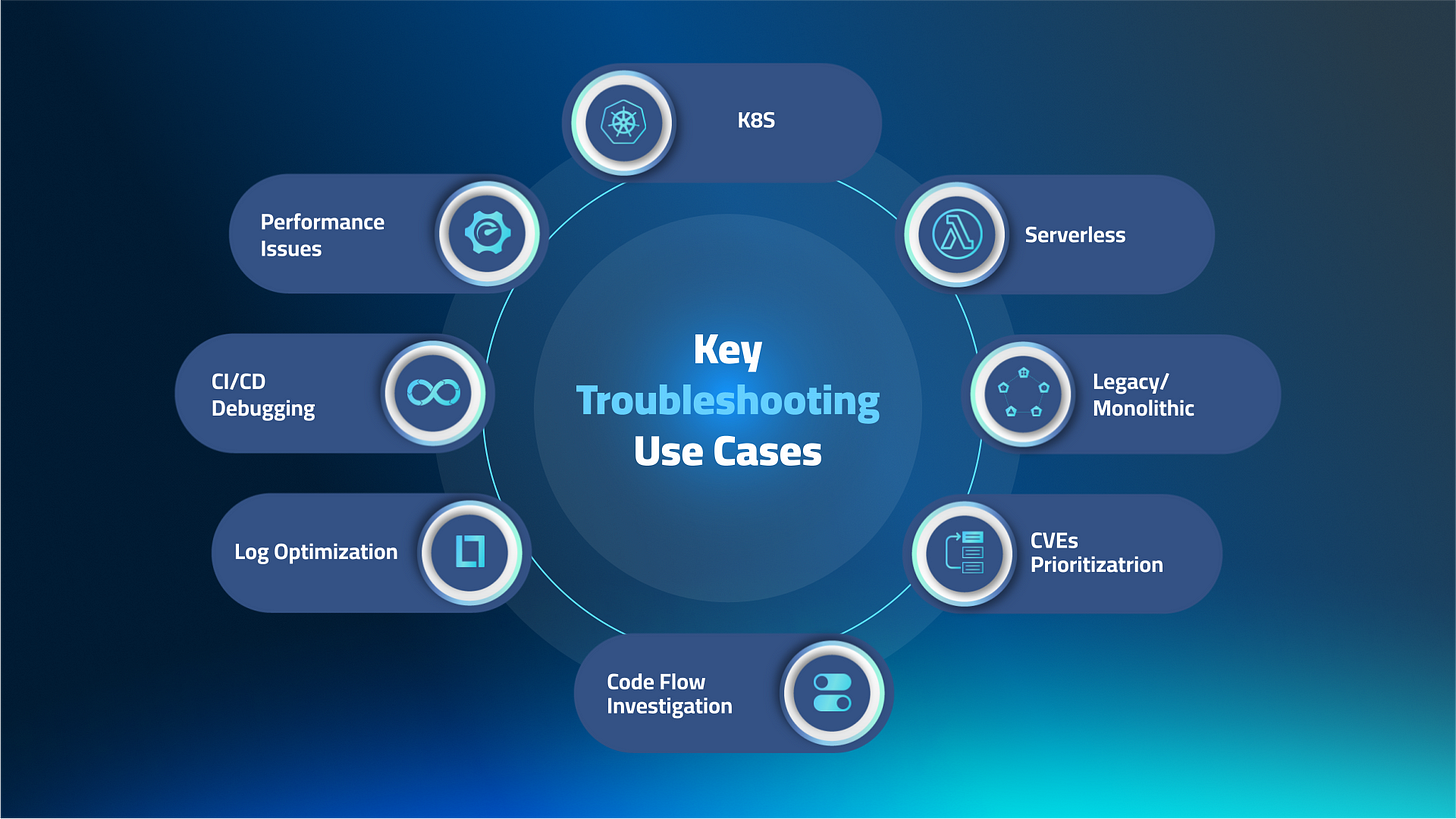
Some common challenges developers often encounter when troubleshooting in production environments, as observed through the lens of Lightrun's experience.
Lightrun is helping clients by:
Reducing MTTR by 60%
Reducing logging costs by 40%
Increasing developer productivity up to 5X
Reducing time to market
Increasing DORA Metrics